For the second project, I took a different logic than the first one. This time, the development and implementation was multi-dimensional.
Let’s start:
Development
Project statement
This project will begin by expanding and interrogating the idea of an instrument
Project 2 statement
This expansion and interrogation may or may not fit the classical definition of ‘instrument’.
My statement
I will use the software Sonic Pi that enables me to use my computer keyboard as a musical instrument. Sonic pie makes music by interpreting text inputted. After I learn it, I will explore some sonic illusions with it.
This form of music Instrumentation is niche. For my inspirations, I based my work off of Sam Aaron, the creator of Sonic Pi. I will do covers of minimalist electronic music, N’TO is a second inspiration. Looking further into the computer keyboard, looking at typists, their techniques and hardware is a good precedent when interacting with text.
In a nutshell, the process is based on inputting letters. The challenge throughout the project was finding the right ideas that get translated into the right strings of letters.
Sam Aaron
Sam Aaron is the creator of Sonic Pi. I wrote about him a nice article. Click here to read it.
One this to take from his talk and the concept of sonic pi is the concept of programming in and of itself can be used for self expression; especially when it comes to explaining a process.
Here is a video of Sam Aaron performing an electronic live set:
Typists and typing techniques
A typist is an administrative professional who completes transcripts and other typing tasks to enable the creation of printed or electronic documents. A typist is someone who provides electronic or hard-copy typed documents at the request of an employer or hiring organisation.
https://myjobsearch.com/careers/typist.html
One fascinating thing about a good typist is his mind boggling speeds in typing a document.
This is the video of the Ultimate Typing Championship Final 2010 By Das Keyboard. Skip to minute 2:00 to see the typists in action.
Seeing crazy fast times like 200 words/min made me question what they are doing differently. It turned out to be a combination of two factors.
- The kind of keyboard
- The technique used which is called touch typing.
I put it upon myself to actually train on that technique on https://www.typingclub.com. This got my speeds up from 13 words/minute to 40 words/minute, as of today. Yes you read it right 40.
The keyboard
The keyboard is one of the roots of the choice of this project.
My life for the past three years has revolving mainly around it. I was on a wheelchair and it was hard for me to walk. To contact a professor I sent him an email. The examples can go forever.
For the future, I believe that my work energy will be channeled through the keyboard.
Here is a post about its particular importance to me
Finding alternatives to the classic keyboard that may have problems sounds like a good Idea to achieve higher speeds.
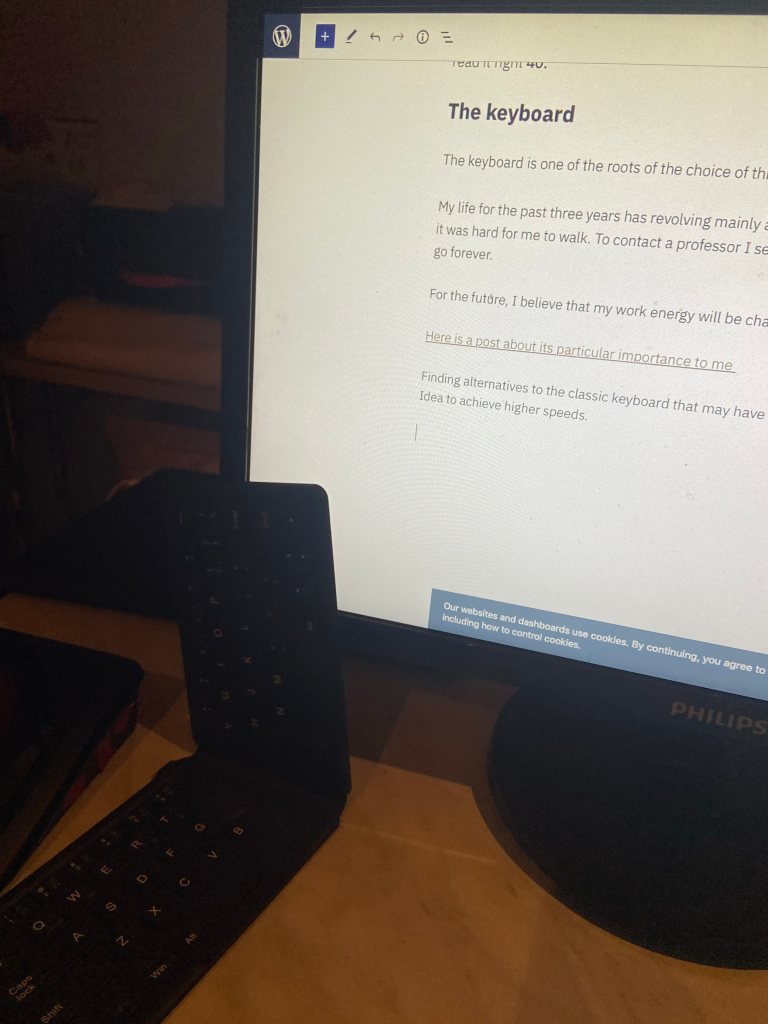
I bought a foldable bluetooth keyboard. It is ergonomic: the button placement is optimized for the technique on typingclub.com. The buttons on it are easy to press.
Further development
Sonic Pi crash course
Part of the development of the project and before I can look for individuals and products I can get inspired by, I went on to learn the abilities and the limitations of Sonic Pi as an instrument.
In a list of two items:
- Sonic Pi helps me play. minimalistic electronic music
- Sonic Pi, with its programmatic approach to sound, helps in coding sonic illusions
Some of the concepts taught, such as data structures, I learned from my years at the American University of Beirut.
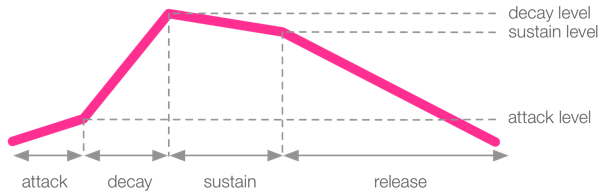
One useful functionality in Sonic Pi is the ease at which I can code ADSR envelopes in synths
I use this little background to actually get my first hand experience in Sonic Pi.
Here is a post in which I get a first hand experience
Inspiration
Now that I have working experience with Sonic Pi, it is easier for me to work on projects by other artists I’m interested in and to actually give it a Sonic Pi spin.
The first inspiration is a music artist. DJ N’TO performs electronic music. His performances can be characterised by a great deal of minimalism.
Other inspirations came from sonic illusions. Namely the tritone paradox that I identified as being a name used for 2 different Illusions.
Implementation
Sonic Pi as a replacement for my violin
First I tried to use Sonic Pi to fulfil things I could do with my violin. The covers uses a nice system where I coded different actors of an orchestra: rhythm maker, chord chooser and different instruments.
This system tells Sonic Pi what note to play when exactly. The what and the when are 2 key components of a musical piece.
I wrote about this system here.
Now that I have a system all set up for work, I can do some covers of songs. I made a cover of Clé des Champs by N’TO.
Sonic pi irrespective of my violin
I also used sonic Pi for sound illusions. This would have been something I would have used it for whether or not I played the violin.
Ever-increasing paradox
This is the paradox where you feel that a sound is always increasing in pitch.
Here I implement it with three tritone pairs.
Please read the thought process here.
I then worked on extended 6 pair version for a smoother effect.
‘is it going up or down?’ paradox
A computer generated tritone going up is played on many different octaves. some listeners think it’s going up and others think it’s going down
Rethinking tritones
Both illusions use a tritone as a basis, this might imply that there is something particular about the tritone. Maybe magical. But is there?
I delve into this question In this post.
My experience with the violin as a means of generating ideas
So far, we have been looking at both instruments as being mutually exclusive. I looked back at me playing the violin to help me answer the question: “is there anything inherently special about the tritone?
In this video I do the “is it going up?” paradox with an exact fourth on the violin.
So this paradox doesn’t have to be with a tritone, or does it?
to start, I tried changing the base note
Here is a post outlining this process
Now for my personal favourite a “tritone paradox” with random intervals
Here is a post explaining how I accomplished it
My CABI2532 folder on dropbox
Don’t forget to check the cabi2532 folder on dropbox.
 CAEL2041: The Art of Sound and Noise