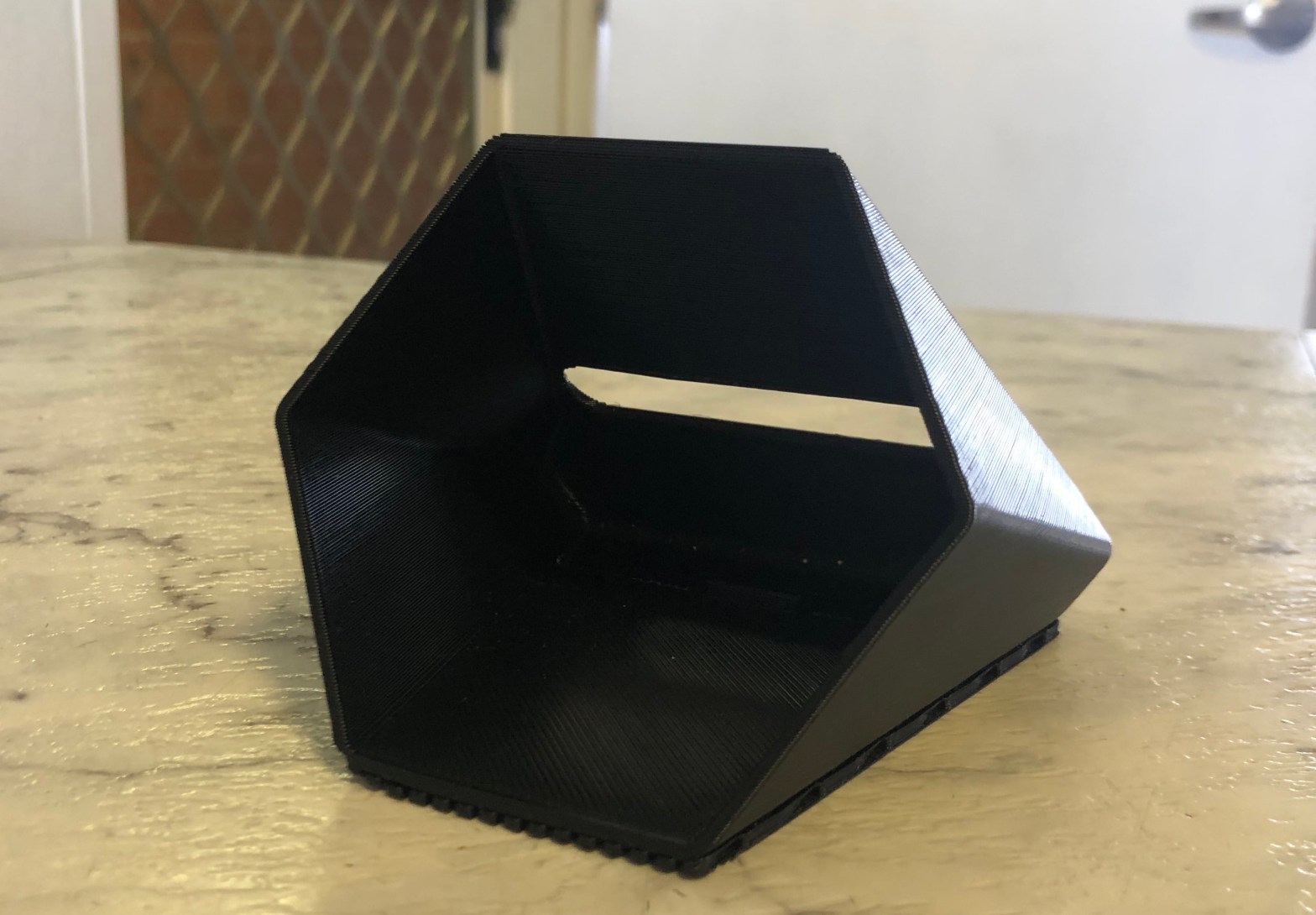
At the end of week one, I thought that we had to bring with us an object that had to do with sound.
I got excited because this is a challenge to do something physical and relates to sound.
This had many constraints:
Constraints
- Do something physically fine, yet feasible with the tremors I am trying to get rid of.
- Let it be “natural”. No batteries, no electronics, no MIDI controllers or any other jargon.
- Aesthetics. Something that LOOKs good will give the illusion that it SOUNDs better.
Now that these three constraints are put, it paradoxically easier for me to search.
I searched “3d printed sound” , as if 3D printing and audio output is feasible. But I tried, and good thing I did!
I found a lot of interesting, open source models. But here is what I stuck to:
The speaker
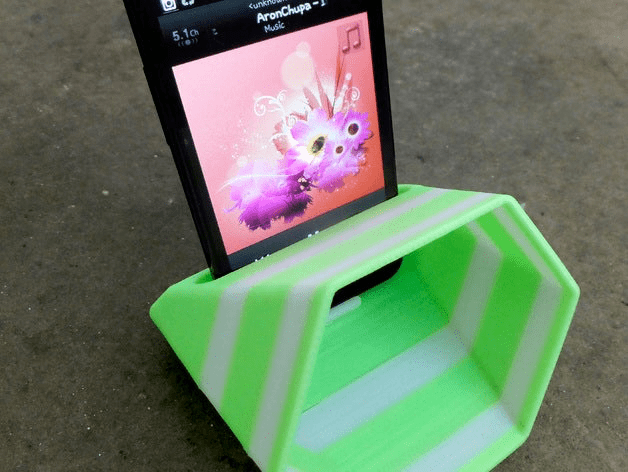
On https://www.thingiverse.com/thing:603596 i found a nice looking speaker.
A clean and simple amplifier for your mobile phone.
https://www.thingiverse.com/thing:603596
Here is a picture of what’s intended.
Some background
Although I didn’t have enough time to examine this in a mathematically rigorous way, this design looks very much like a sound pipe.
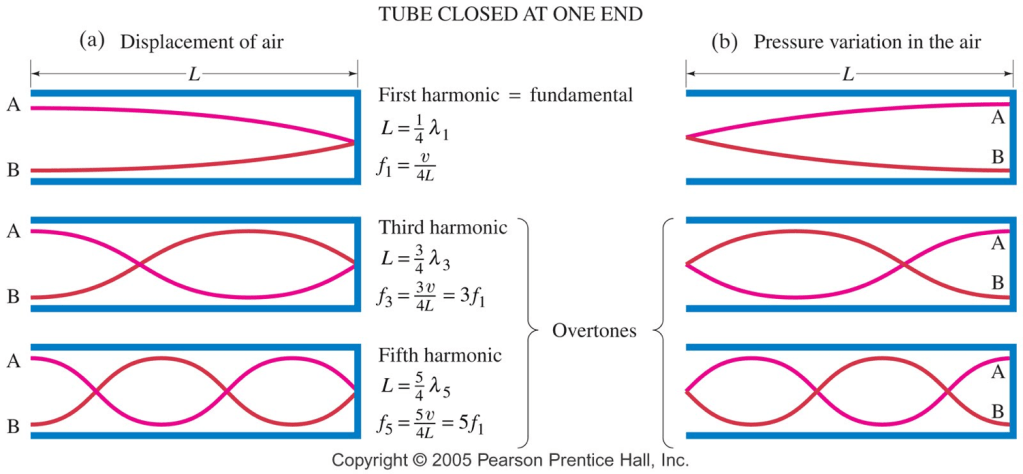
I didn’t really do the mathematics. But it’s somewhat apparent that the high frequencies (e.g. sound of human voice) will tend to get amplified.
This will work with the concept of constructive interference.
A constructive interference occurs when identical signals are in phase and add up to each other.
Slides of Prof. Mihran Gurunian
Getting it done
The final step is just applying this 3D model physically.
I took an appointment in the ThinkSpace Library.
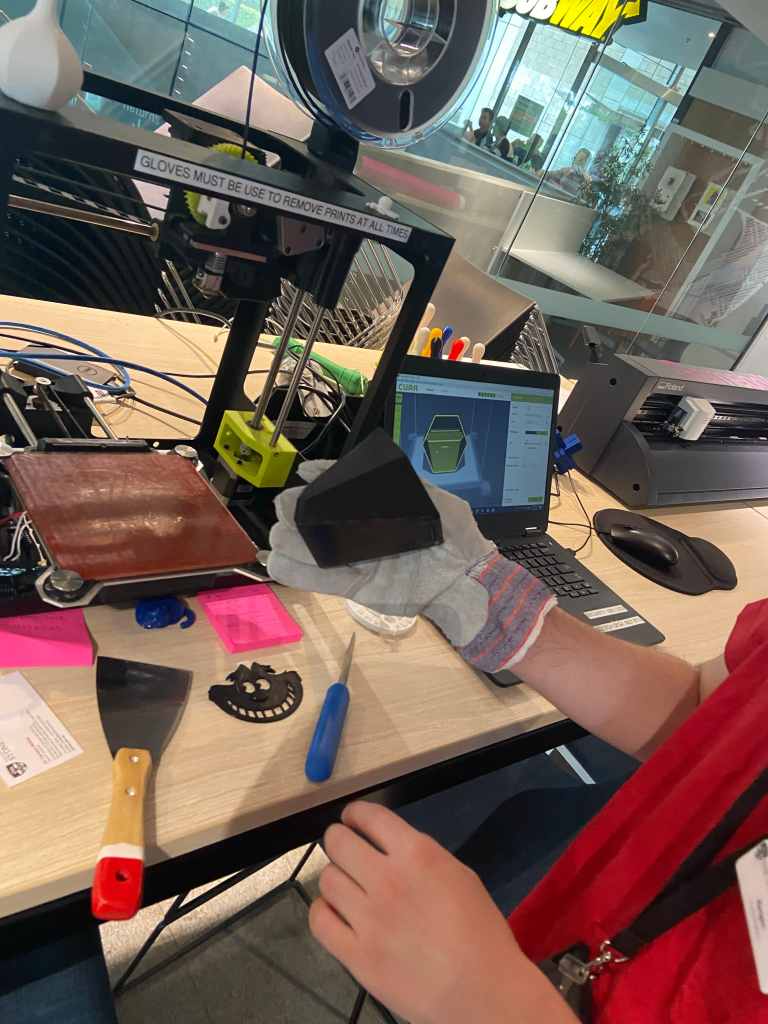
The print job only took 3 hours.
Make sure you watch the video demo.
Cheers.
 CAEL2041: The Art of Sound and Noise